

Nov 23 Choosing to Put Children First: Lessons from Scotland for Allegheny County
(November 23, 2026)
“If you get it right for a three-year-old, you get it right for everyone.”
Since returning from Scotland in September, that single sentence has been living rent-free in my head.
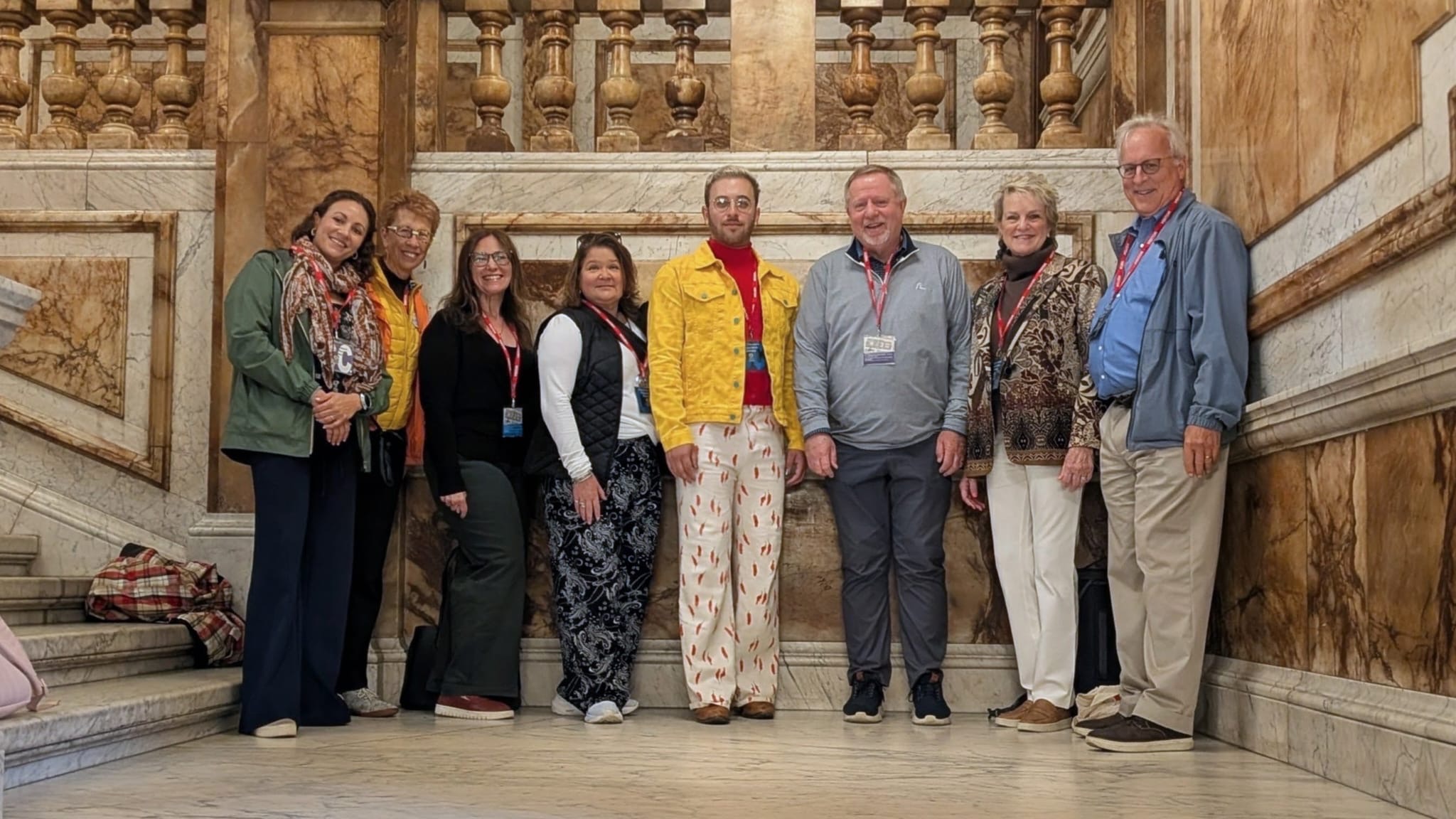
I heard it more than once during my time in Scotland, and it has quickly become a guidepost for how I think about advocacy, systems change, and the future of Allegheny County. I had the privilege of traveling to Scotland as part of a U.S. delegation studying youth participation in democracy. What I found was a nation that hasn’t just made a verbal promise to support its youngest citizens—it has made a legal commitment to end childhood poverty and put children and young people at the center of policy decision-making across the political spectrum.
Imagine what our region—and our country—would look like if policymakers treated childhood poverty with that same nonpartisan urgency.
Across visits to Edinburgh, Glasgow, Stirling, and Kirkcaldy, every conversation we had about community resilience centered on kids. From meeting with the Edinburgh and Glasgow City Councils to learning from organizations like Children in Scotland and the Edinburgh Futures Institute, a few critical lessons stood out:
- Language matters: In Scotland, they don’t refer to teenagers and adolescents as “youth”—they call them “young people”. It is a subtle shift, but it carries real weight. Young people aren’t just passive recipients of adult decisions; they are budding citizens whose futures are being shaped right now by the adults in charge.
- Legal commitment drives culture and inclusion: Scotland has made history by incorporating the United Nations Convention on the Rights of the Child (UNCRC) directly into its domestic law . The UNCRC is the most widely ratified human rights treaty in the world, outlining 42 specific articles that protect every child’s civil, political, economic, social, and cultural rights—including the right to education, health, play, an adequate standard of living, and, crucially under Article 12, the right to be heard in all decisions affecting them.
- Accountability is critical: By embedding the UNCRC into Scots law, children’s rights are no longer treated as a nice-to-have checkbox—they are a binding legal duty. Public authorities are legally prohibited from acting in ways that violate children’s rights, Scottish Ministers must conduct formal “Child Rights and Wellbeing Impact Assessments” (CRWIAs) on new legislation and strategic decisions, and public bodies must report every three years on how they are advancing children’s rights (including publishing child-friendly versions of those reports). Even more remarkably, children, young people, and their advocates have the legal standing to challenge public authorities in court if their rights aren’t respected.
- Shared struggles, shared solutions: Walking through Kirkcaldy and meeting with leaders in Glasgow (Pittsburgh’s sister city), it was clear that Scottish communities face many of the same political, economic, and structural challenges we navigate here in Southwestern Pennsylvania. The difference isn’t the absence of struggle; it’s the collective agreement that children come first when designing the solution.
Returning to Pittsburgh, my mind has been racing with possibilities. How would students from different sides of Allegheny County view and prioritize the issues impacting their lives if we actually included them in policy decisions? And are the adults currently in charge getting it right for them?
The trip sparked several concrete ideas for what we can build right here at home:
- What if… we adopted UNICEF Child Friendly Initiatives? Before we ask young people to navigate broken systems, we have to commit to building a community designed with their well-being in mind. Adopting the UNICEF Child Friendly Cities framework—or passing a local resolution affirming the principles of the UNCRC—could establish the foundational commitment Allegheny County needs.
- What if… we established an Allegheny County Youth Council? We need a meaningful, structured way to bring young people’s voices directly into local policy discussions. A true county-wide Youth Council wouldn’t just inform policymakers; it would bridge divides by connecting students across different school districts, neighborhoods, and lived experiences.
- What if… we embedded Youth Voice into Advocacy? At Allies for Children, this trip is reshaping how we approach our work. Whether we are advocating for out-of-school time funding, career and technical education reform, or student mental health partnerships, we have to ask ourselves: Have we asked the young people impacted by this policy what they actually need? How would they improve the system?
When you design a city, a transit system, a healthcare network, or a budget that works for a three-year-old—ensuring they are safe, nourished, supported, and heard—you inevitably create a community that is healthier, more accessible, and more resilient for every single resident.
Scotland showed me that putting children at the center of public policy isn’t an impossible ideal; it is a choice. Now, the work ahead of us is making that same choice for Allegheny County.
Jamie Baxter, Allies for Children Executive Director